Take a Chance on What’s Inside the Box: A Romantic Confession from the Designer of the Cat Hug Series
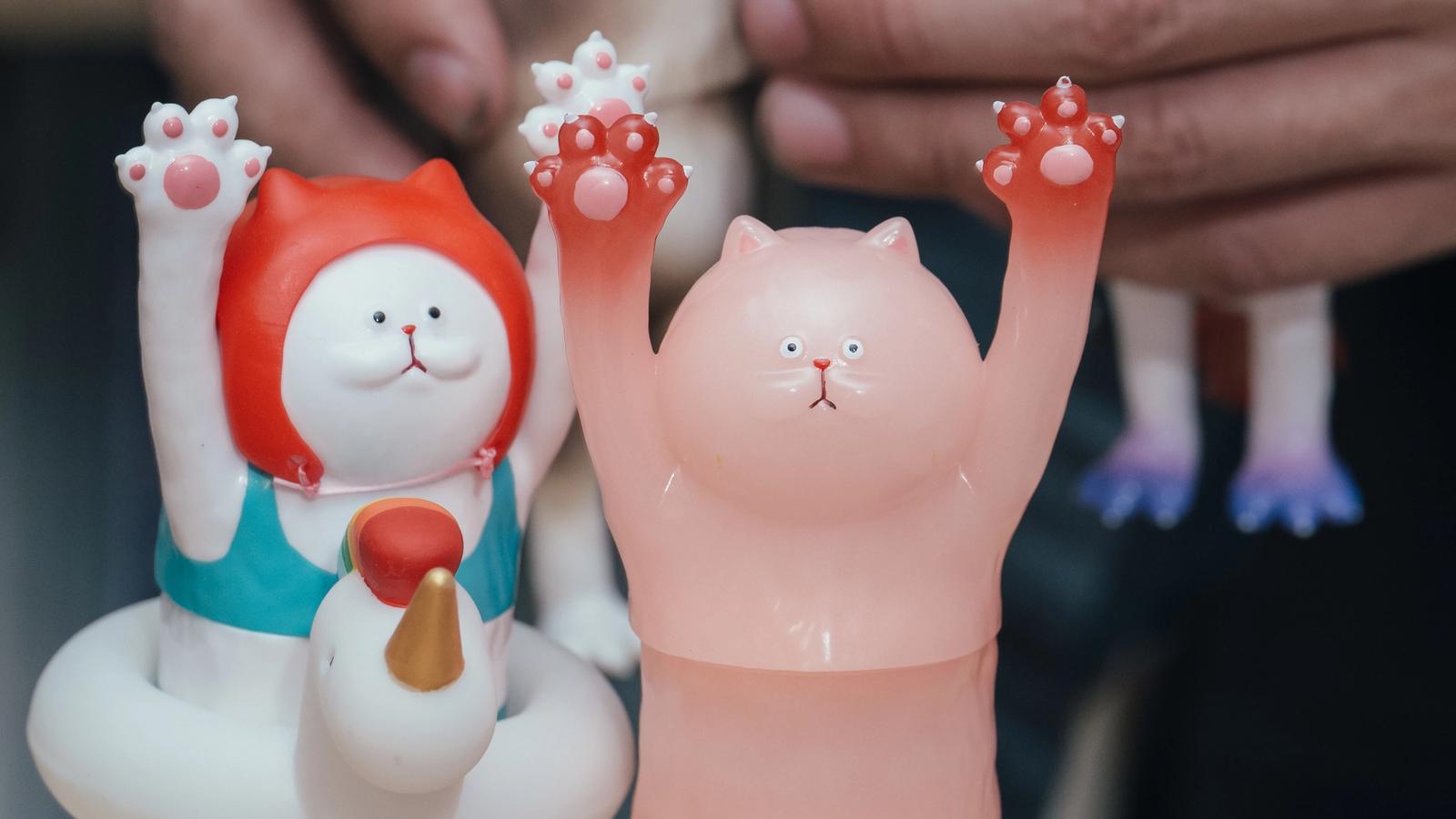
In the Cat Hug Series blind boxes, you have a one-in-32 chance of drawing a cat figure whose markings resemble your cat—your “feline overlord,” as cat lovers in Taiwan jokingly say! As you agonize over which box to choose, the shopper beside you simply carries off a sealed display case containing 16 different randomized designs. Muttering, “Please let it be the calico,” you head for the register with a mysterious thrill rising inside you… “It’s like the lottery: everyone thinks their luck ought to be pretty good. The point is to enjoy the pleasure of not knowing,” says Dylan, designer of the Cat Hug Series.
You Read That Right: These Cats Are Asking for a Hug
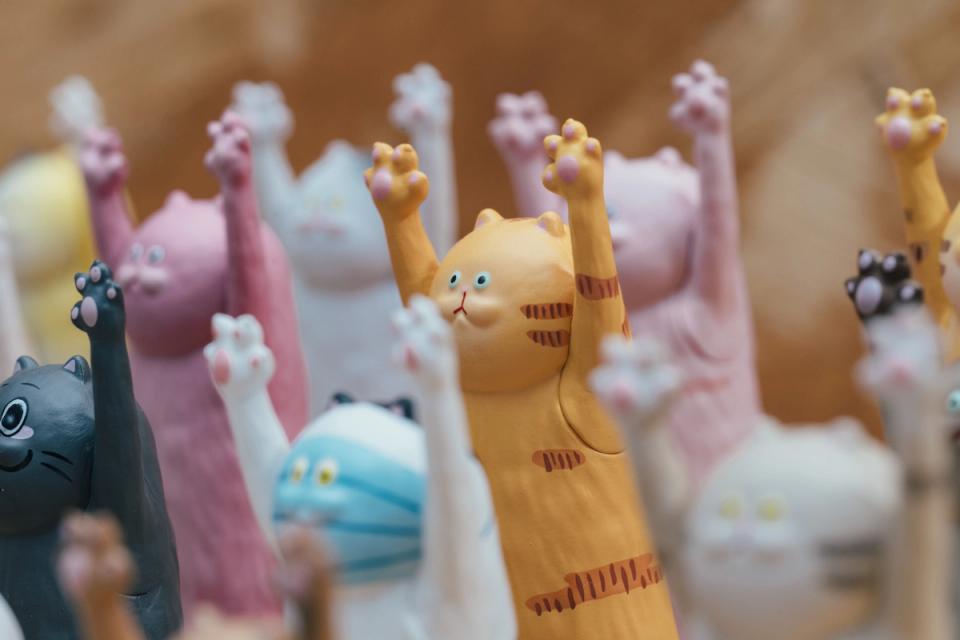
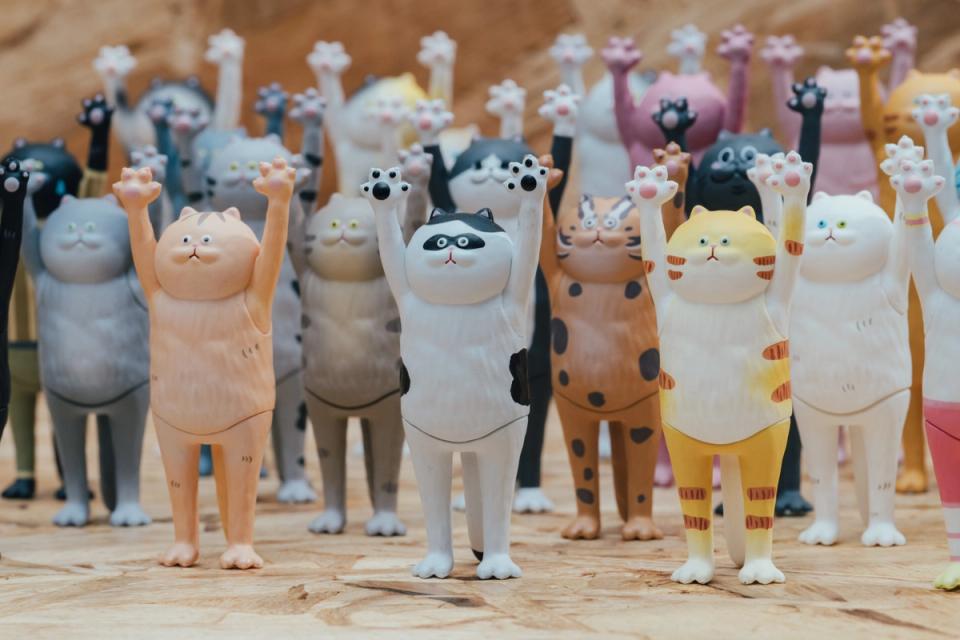
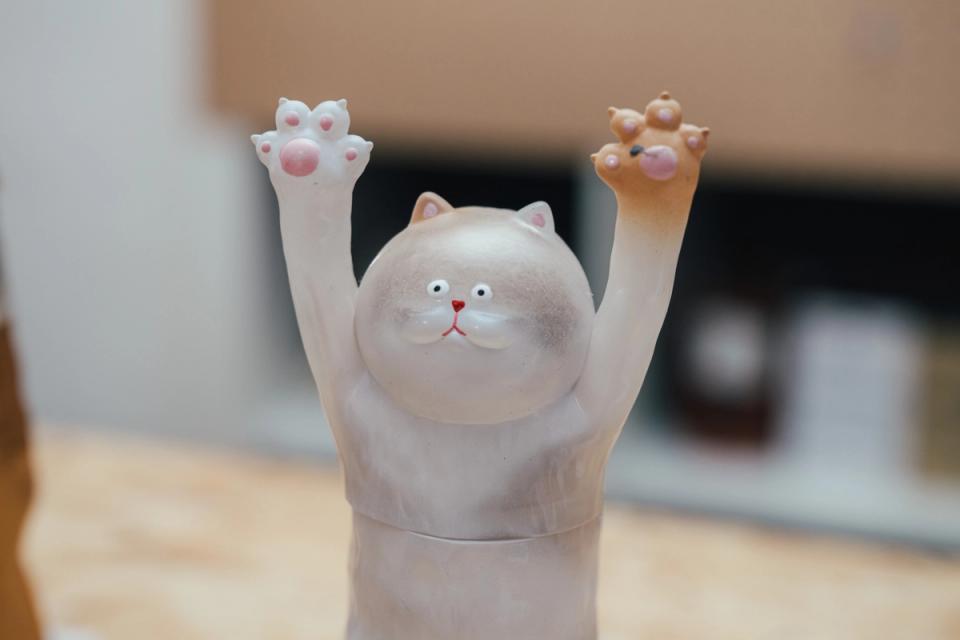
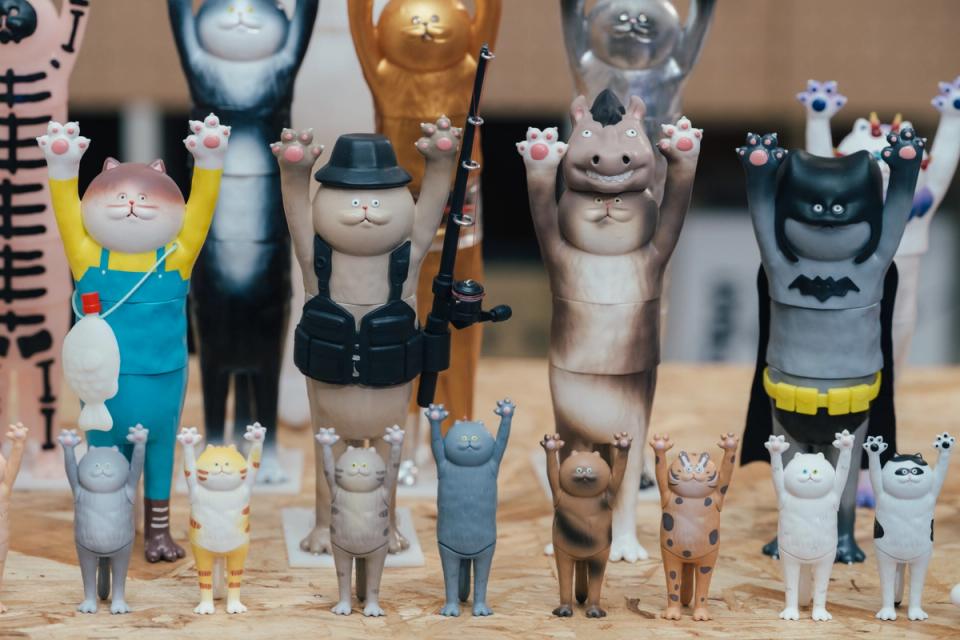
Most of the cats on Planet Earth wear an aloof, faintly bored expression. Asking you for a hug? That would be like watching a villain turn good, an impossible mission. The Cat Hug figures launched with a formidable cast of 32, presenting Dylan with an unprecedented challenge. “When I first discussed the licensing collaboration with Luyao Original, we decided to make every kind of cat we could imagine. I simply wanted Cat Hug to conquer the hearts of cat lovers the moment it launched!” For him, this was neither a bid to chase the pet craze nor a commercial calculation that cats automatically sell. It came from a wholehearted obsession with them.
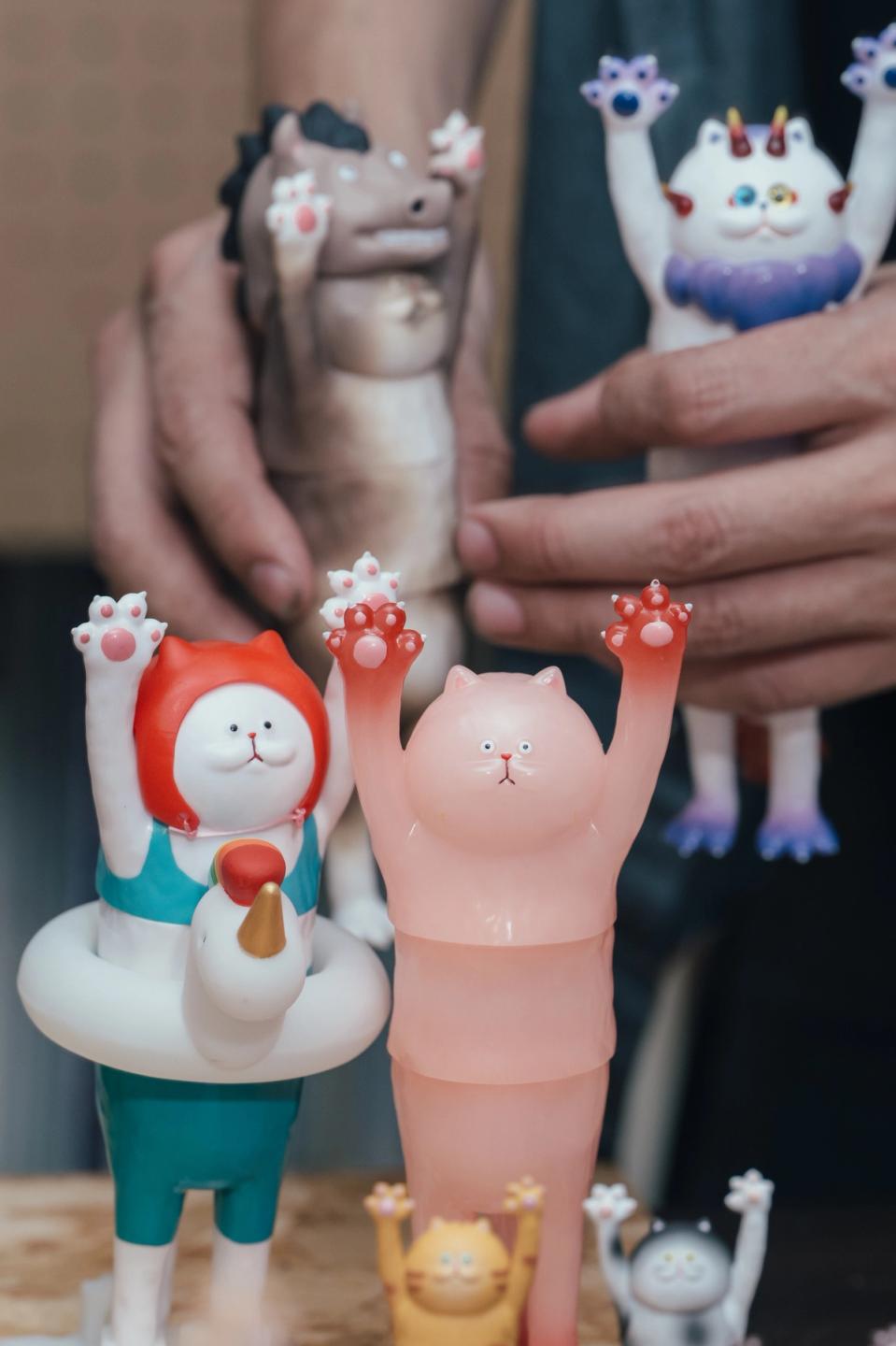
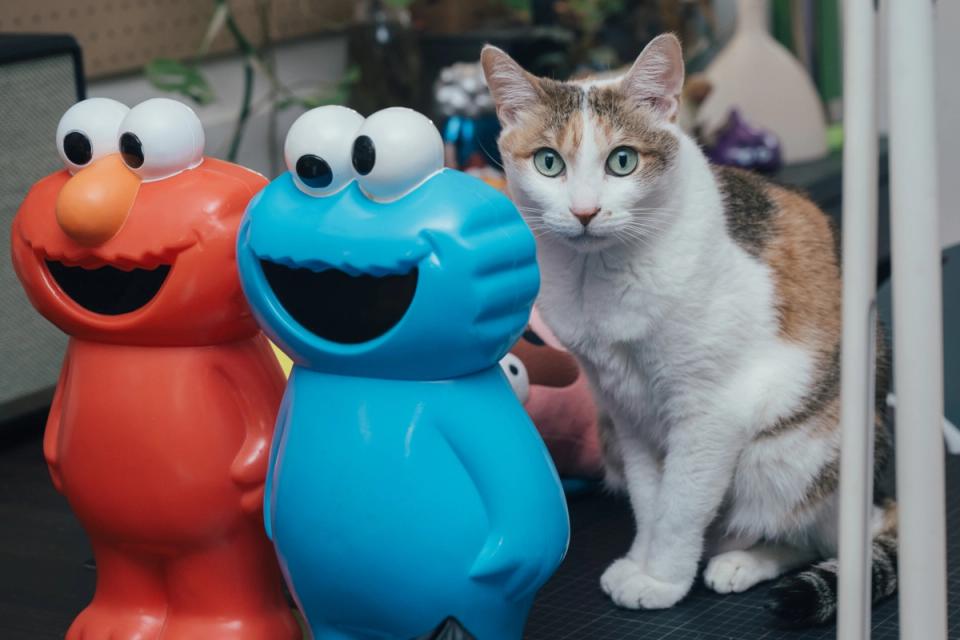
Dylan is a cat person through and through. He has lived with cats for decades, served as a foster caregiver, and at one point shared his home with as many as twelve. Today, Latte and Mocha live in his studio—two cats perfectly content to curl up together for an afternoon nap. Years of close company have given him a keen feel for feline temperament and detail. Each figure resembles a cat you might have met only yesterday: an easygoing orange tabby adored by everyone, a black cat transformed into a delivery courier, or the mischievous, completely hairless pink Pipi. Dylan uses each character’s “skin”—its outward styling and costume—to give it a distinct personality. Raised paws reveal plump little toe beans, beckoning every one of those cat lovers closer.
Encouraged by the enthusiastic response to the Cat Hug blind boxes, the team followed up last year with a plush edition. The original figures, each under ten centimeters tall, grew rounder and taller to become 20-centimeter plush toys. They retained the series’ lovably cheeky expressions and arrived at 7-ELEVEN in blind-box form, available only at 900 stores.A buying frenzy soon followed. Yet for Dylan, present popularity is no guarantee of the future. “I don’t think of it as success. It simply means that, at this stage, I still have the chance to keep moving forward.” The support and praise of fans have given him irreplaceable affirmation and encouragement, convincing him that he really can make toys people love.
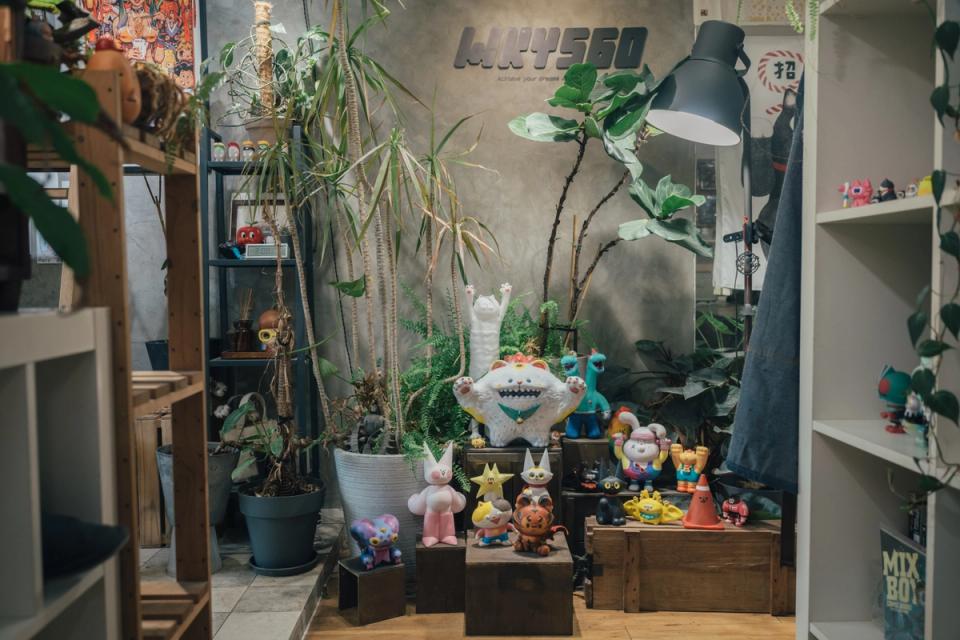
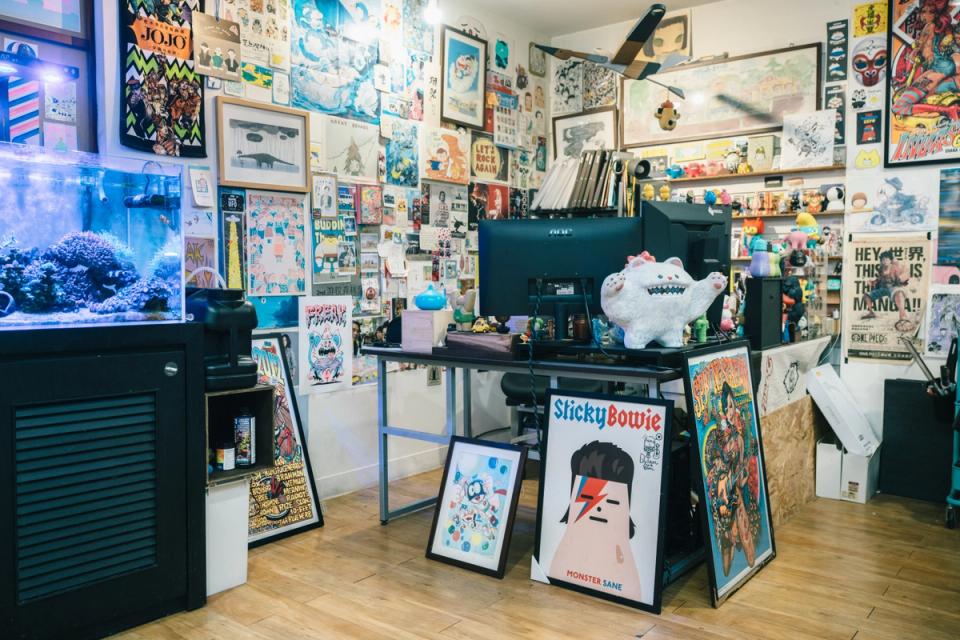
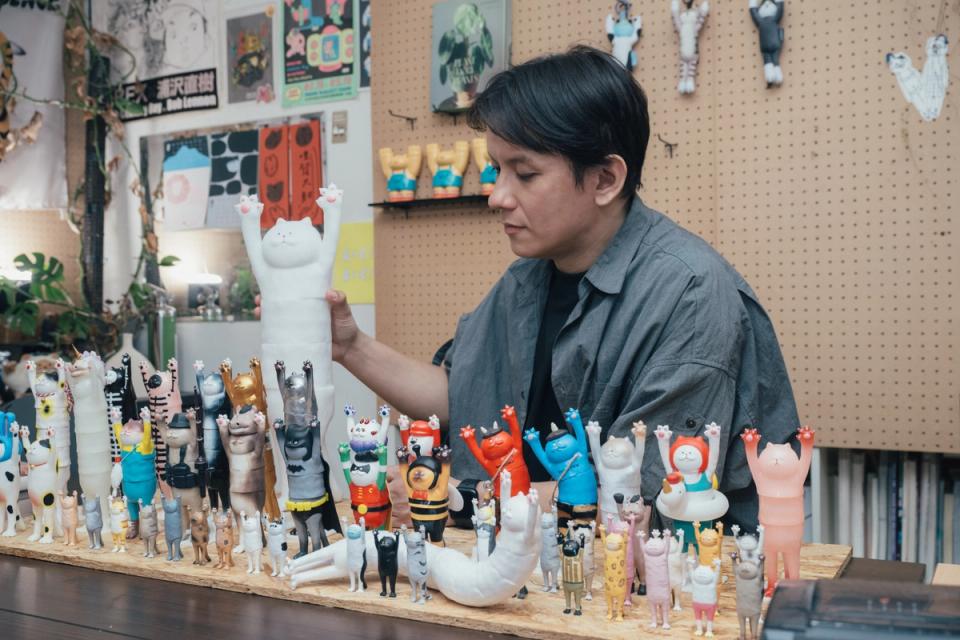
At the back of the studio is a room devoted to making art toys. Open the door and you enter Dylan’s creative wonderland,the birthplace of Cat Hug. Machines large and small fill the space; vivid paints and crafting tools line the walls; clusters of unfinished toys rest silently on display racks, as though they might come alive after dark in a scene from his favorite stop-motion film, The Nightmare Before Christmas…
Only When the World Paused Did He Rediscover Himself as a Creator
When the pandemic erupted in 2020, the world pressed pause and familiar rhythms fell apart. Dylan, however, began a second life and set out on an entirely new adventure. At the time, he and his partners were managing the Mi Quan Ri Chang character property. Dylan handled webcomic scripts, social media, and merchandise development, spanning digital stickers and comics online as well as plush toys and charms offline. The diversified operation had been developing steadily until COVID-19 spread through Taiwan and more than ten retail partners could no longer continue working with them. Reality forced a choice. “Revenue fell to just ten percent,” he says with a wry smile. “There was no way to keep forcing ourselves to hold on. We had to change direction.”
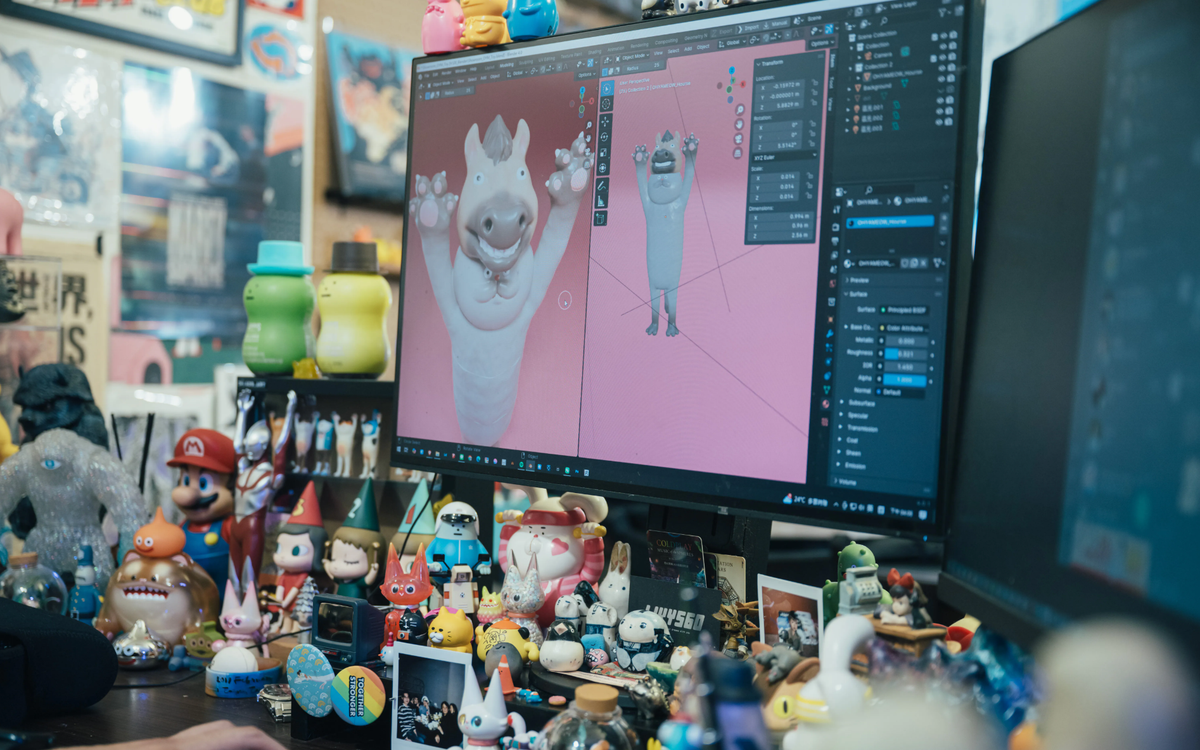
The birth of an art-toy figure can be divided roughly into concept development, 2D sketching, 3D modeling, mold development, paint sampling, and finally mass production.
1 / 2Already an avid collector of vintage soft-vinyl toys, Dylan used this uncertain in-between period to experiment with making three-dimensional figures. He taught himself 3D modeling and printing, then created his first character, WOOOODY: a round-bodied little monster with King Kong shoulders, a mysterious Godzilla-like build, and a catlike face wearing a sweetly goofy grin that makes you smile without meaning to. That year, overseas designers were unable to attend the Taipei Toy Festival, one of Taiwan’s landmark art-toy events, giving local creators a rare chance to be seen. WOOOODY made its debut there. Soon afterward, nearly thirty resin-cast WOOOODY figures sold out at Creative Expo Taiwan. The response gave Dylan a powerful shot of confidence and convinced him to return under a new identity: art-toy designer.
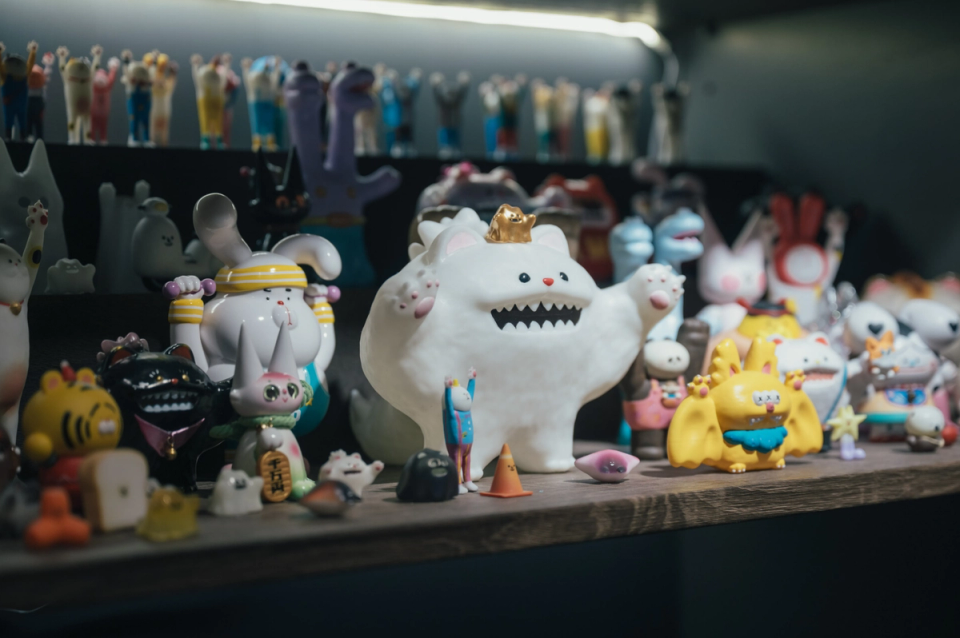
Holding the Cat Hug prototype, a large, 20-centimeter soft-vinyl figure, Dylan deftly demonstrates the effects of hand airbrushing, layering color into a furry-looking gradient. “Everything began with a casual sketch. We used computer-based 3D modeling, but to preserve the warmth of something sculpted by hand, I revised the surface texture again and again. The character finally came to life in 2022.” Drawing on cats’ love of stretching, he also built more playfulness and variation into the soft-vinyl series. The figure’s body can “grow without limit,” or be swapped for a serpentine, twisting torso that produces uncanny sideways poses. He laughs that even Japanese visitors at toy fairs are astonished by the design; some raise both hands and mimic the Cat Hug pose for photographs with the figures.
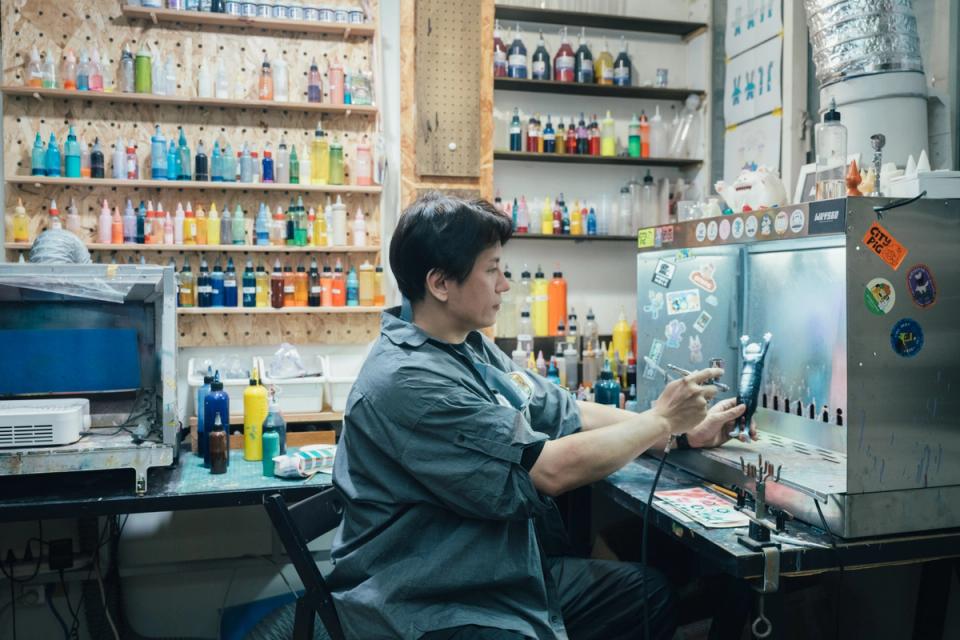
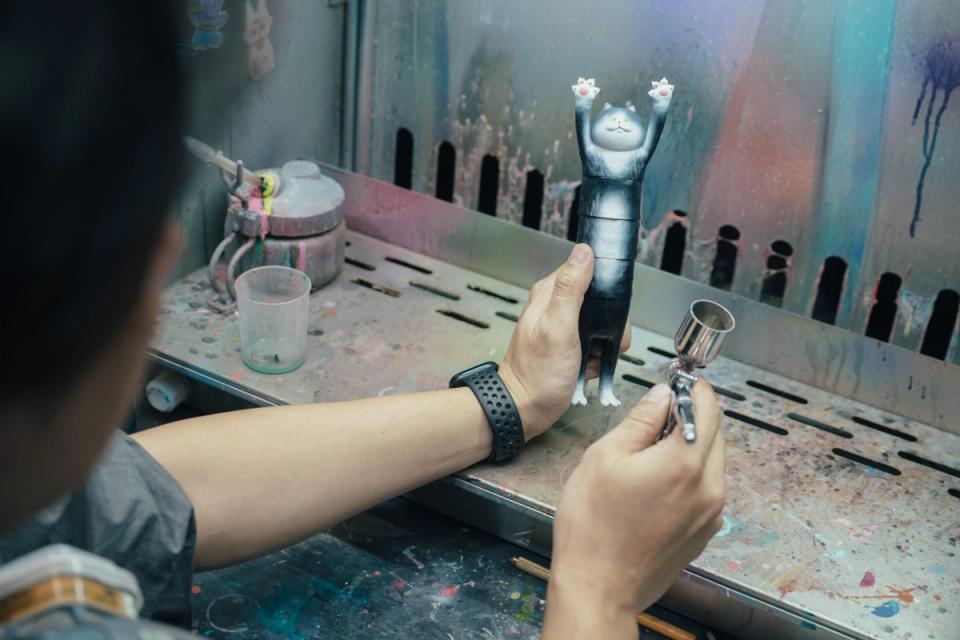
“I’m delighted that licensing the character as a blind box lets it reach more people, but I still love handmade designer toys. The most enjoyable part of toy making is physically turning a 2D character into a 3D object with my own hands.” Becoming a toy designer with a comfortable studio of his own had long been Dylan’s dream. When applying to university, he had set his heart on sculpture in the fine-arts department, only to land unexpectedly in traditional Chinese painting. After graduation came multimedia design, mobile-game development, and character licensing. Only now has he found his way back to the road he once imagined. He has learned that creative energy stays alive only if you hold on to your earliest passion for what you love.That momentum, being unable to stop because it is simply too much fun, is what keeps a work alive.
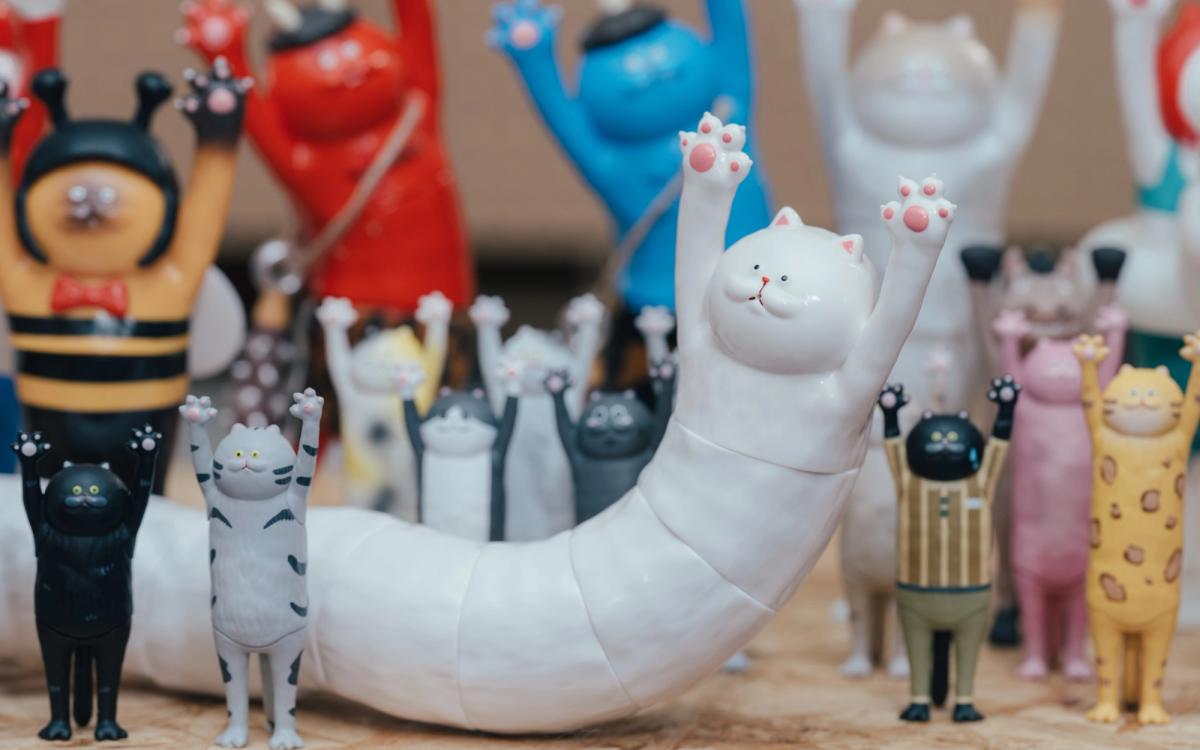
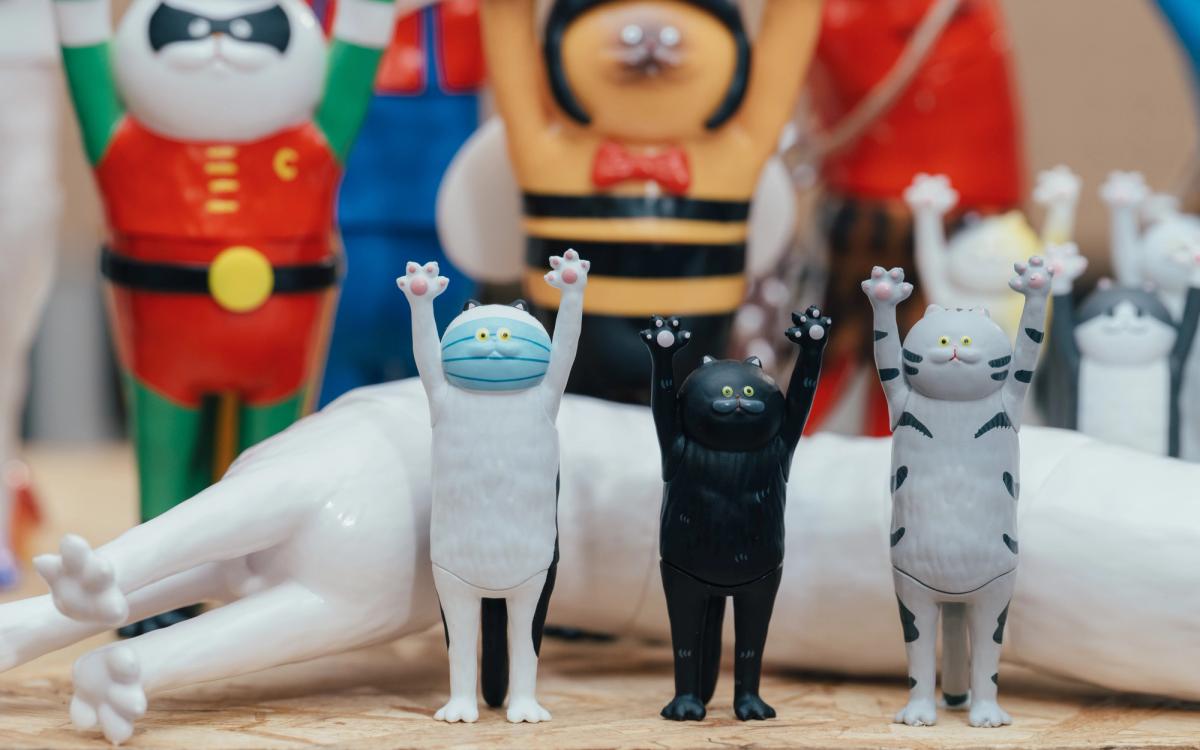
“It feels wonderful to see so many people loving Cat Hug. The sense of comfort I have always insisted on has truly reached them and it gives me even more strength,” Dylan says with satisfaction.
1 / 2Paying for Comfort: Cuteness Needs No Explanation
Cat Hug has grown from a designer toy into blind-box figures and plush charms, moving from a niche collecting circle into the mass market. Dylan’s original Hello Taiwan blind-box series has also resonated with visitors and Taiwanese consumers through minimalist smiles paired with classic local motifs. It began with marine animals inspired by Taiwan as an island, then turned toward everyday culture through themes seen from different angles: urban marvels in the eyes of Japanese visitors, such as scooters and yellow taxis; nostalgic scenes beloved by Taiwanese people, including Grandma’s terrazzo bathtub and the red-white-and-blue barber pole of an old barbershop. The recently released fifth wave, the Deity Series, playfully transforms figures from folk belief—including the Matchmaker God, the Golden Hen, and Mazu—into finely made collectibles, blending folk art and contemporary design with an assured touch.
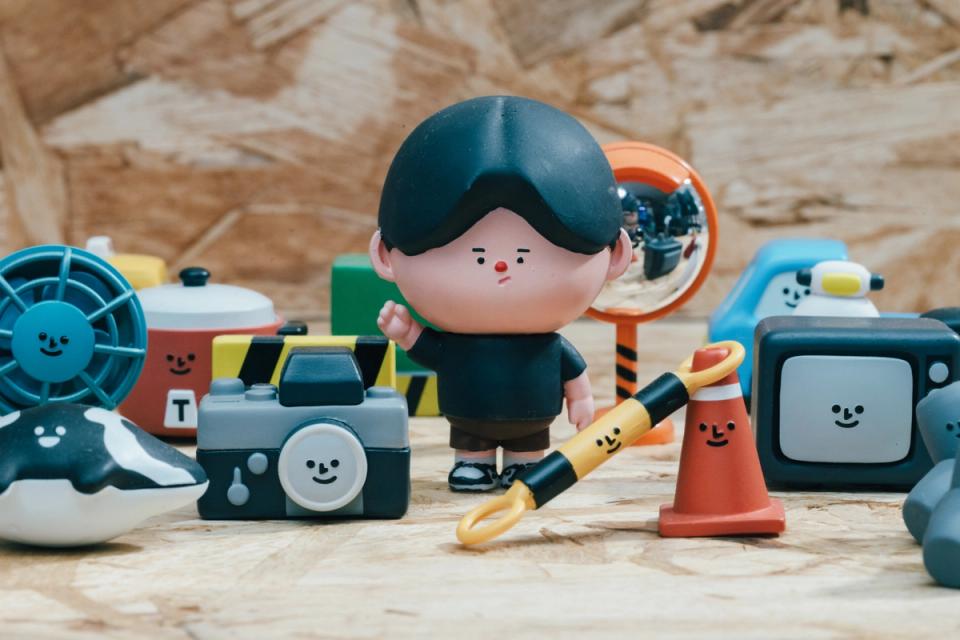
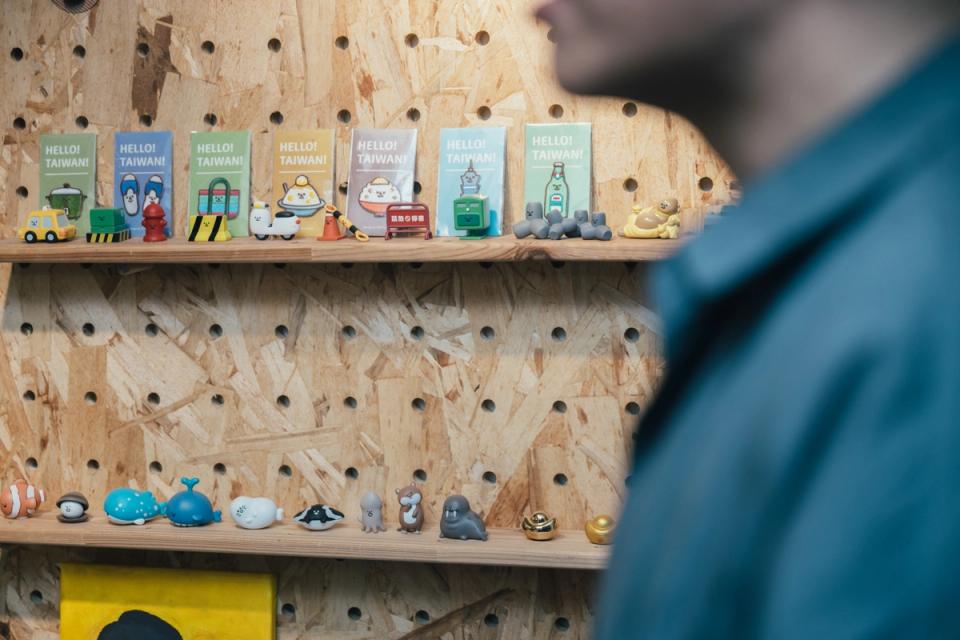
What principles guide Dylan’s toy design? He believes that “a character must first bring comfort to its creator before it can bring comfort to anyone else.” His first consideration is a subject he genuinely loves and finds compelling; the second is distinctiveness—the character must not be easily forgotten. The real battleground for blind-box toys is often offline, where a figure’s appearance has only moments to seize attention. Cuteness may be subjective, but years of experience have taught him that the decisive elements are expression and presence. Details most people barely notice are often the very ones over which a creator has deliberated longest.
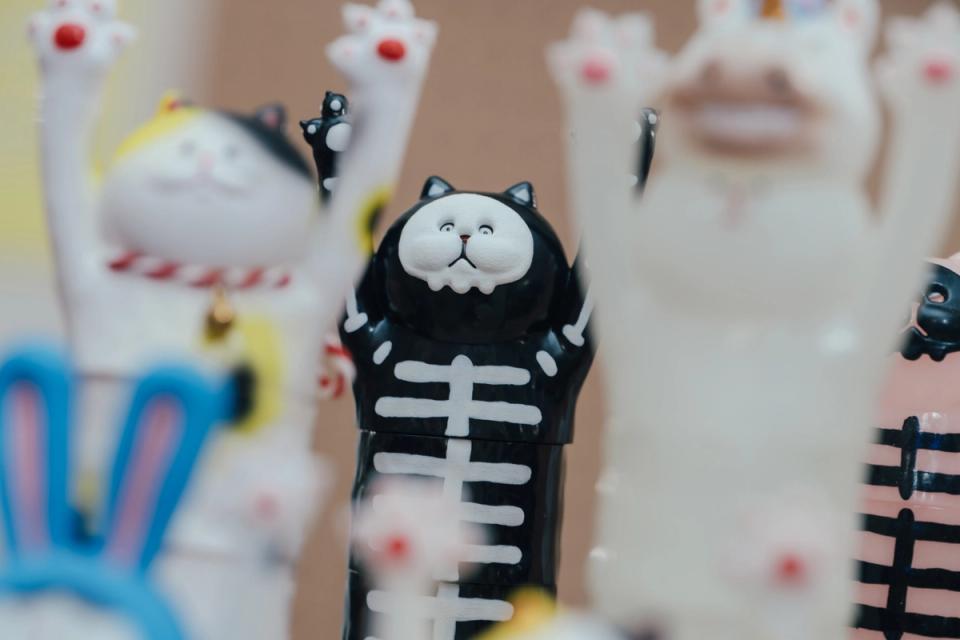
“If looking at a toy can make you feel better, the design has succeeded. For me, nothing matters more than that change in mood.” Dylan’s words help explain the rise of the play economy. BLACKPINK’s Lisa sparked a worldwide rush after showing her personal LABUBU collection on social media, while Jellycat plush toys, originally created to soothe babies, unexpectedly became an antidote to anxiety for teenagers and adults. Such phenomena reveal how urgently people today want relief from the pressures of reality. “They want to recover the carefree happiness of childhood and hold it in their hands. When a toy becomes more than a toy—when it becomes an emotional outlet—people naturally choose to pay for that sense of comfort. That is why the toy industry has grown so enormous.”
Dylan observes that Japan has many long-running anime and character properties: Mazinger Z, Gundam, Godzilla, Dragon Ball, and Ultraman among them. They were the cartoons that fascinated him as a child, and their merchandise has returned to fashion, continually reappearing as newer and more finely made soft-vinyl toys, models, and blind boxes. Their audiences now span generations, giving children and parents a shared language and more opportunities to play together. Dylan himself has recently been watching Sesame Street with his daughter, and has found that simple, innocent designs are often the ones that hold up best, a realization that moved him in a new way. He hopes his own work can become like those classic characters: never complicated, yet capable of delivering the most direct and unadulterated joy.
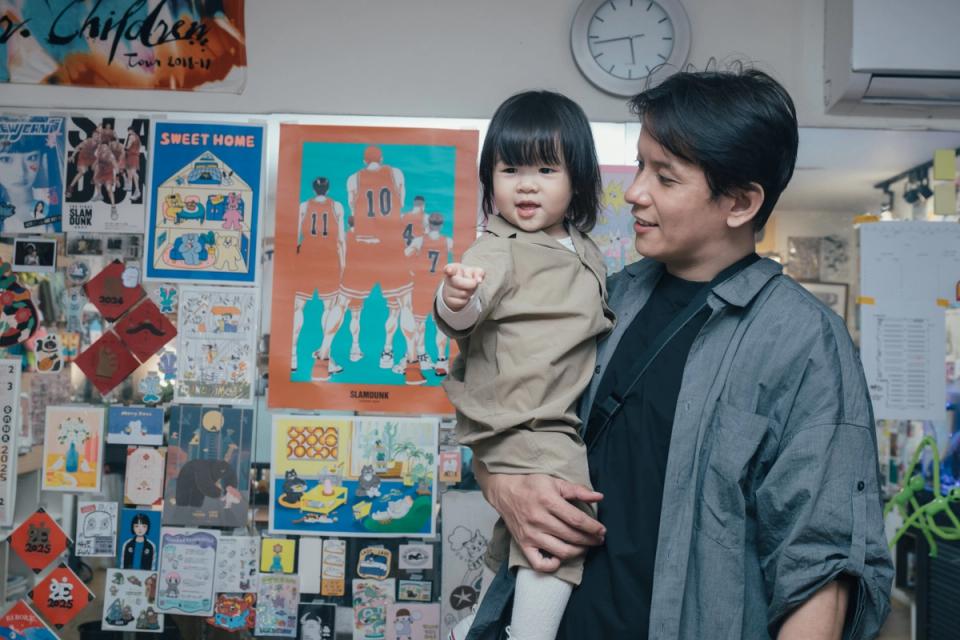
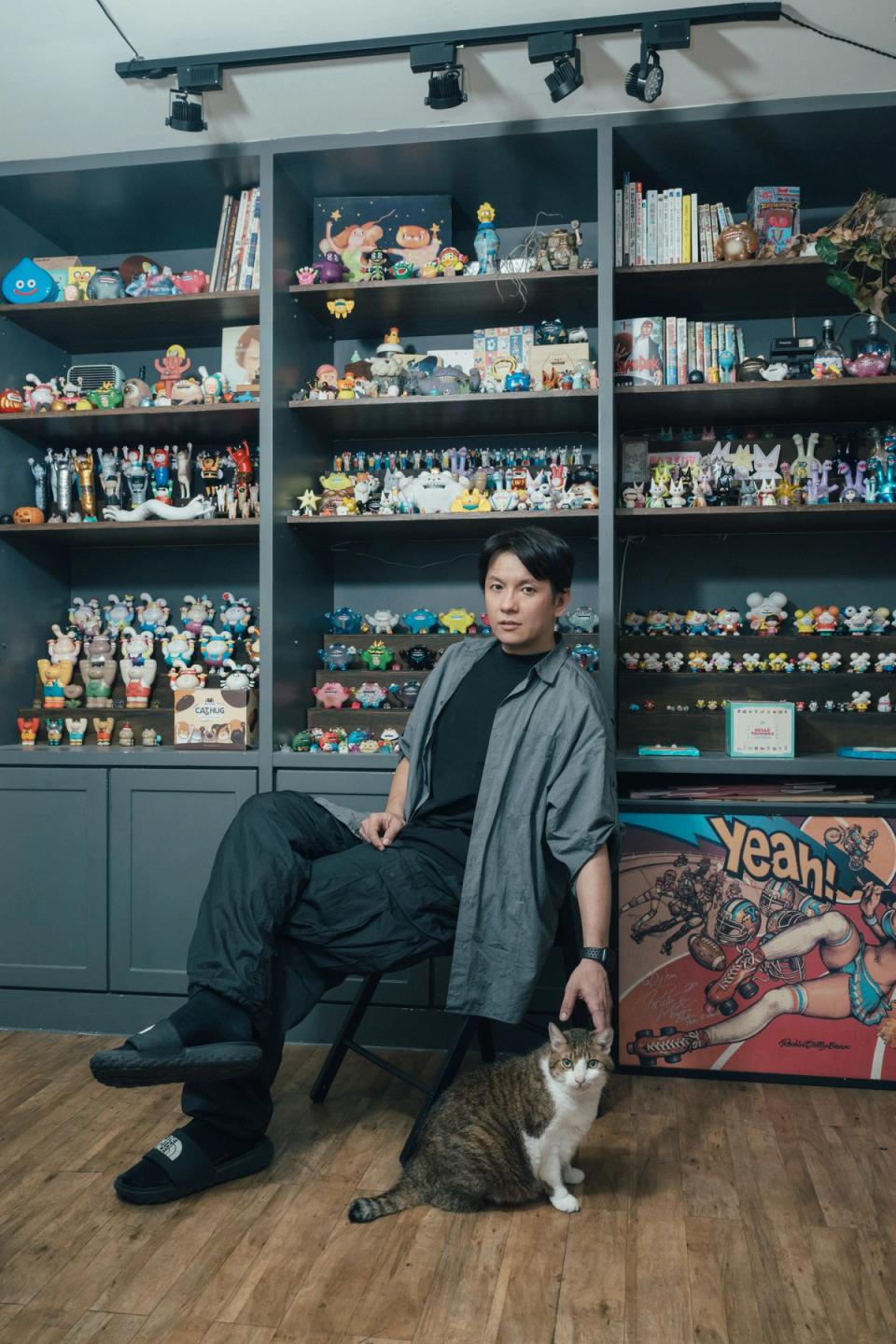
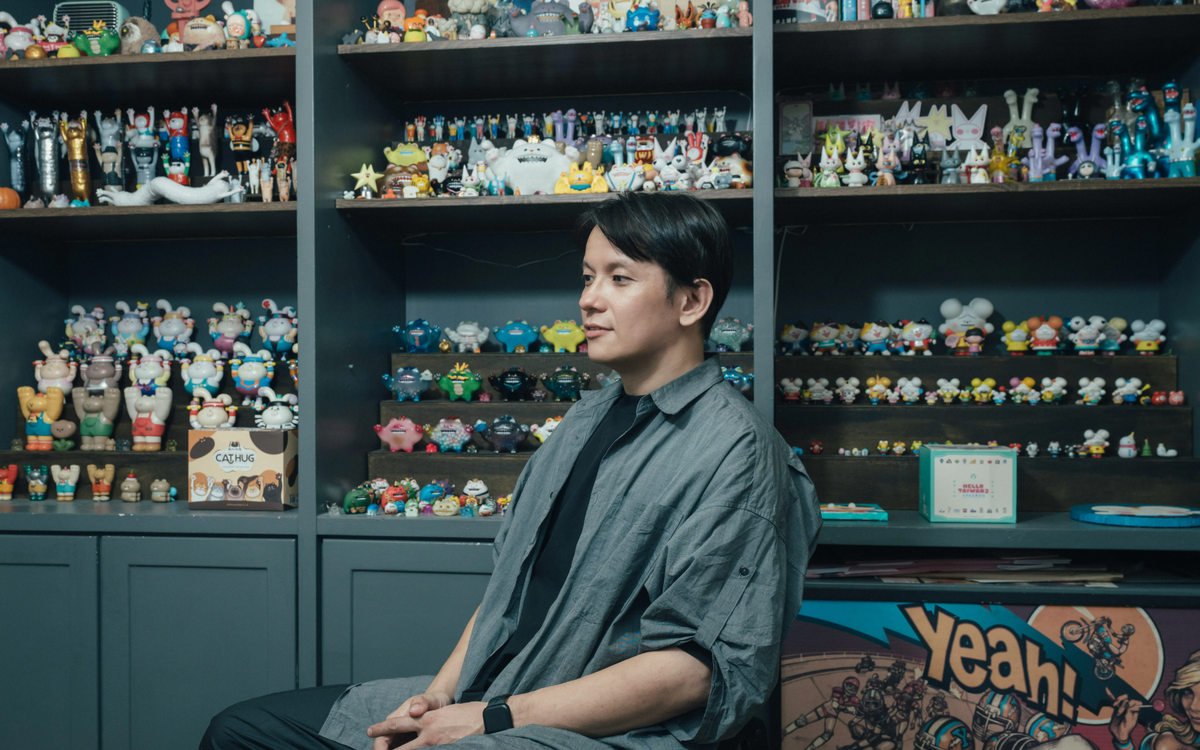
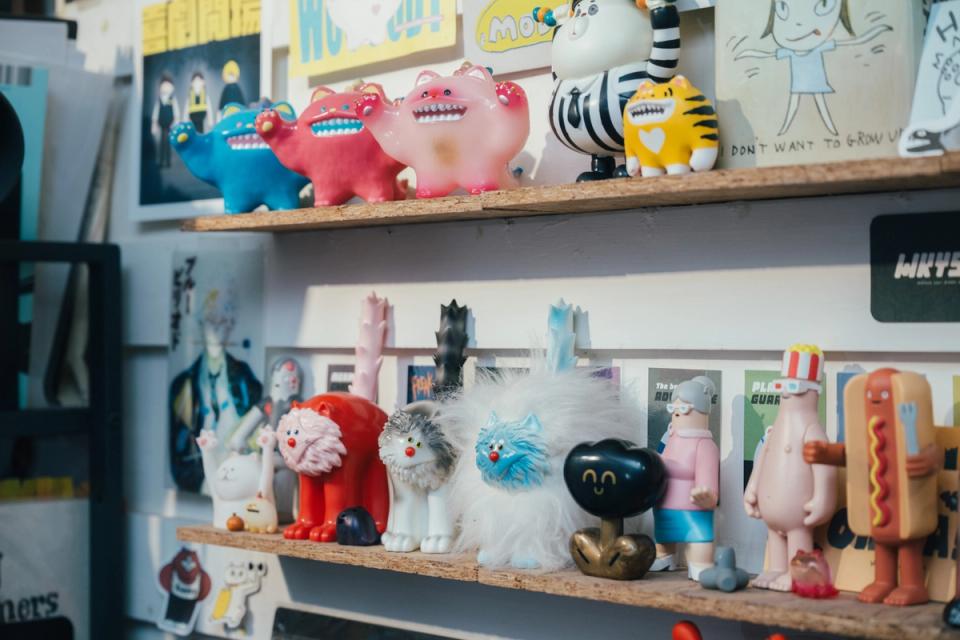
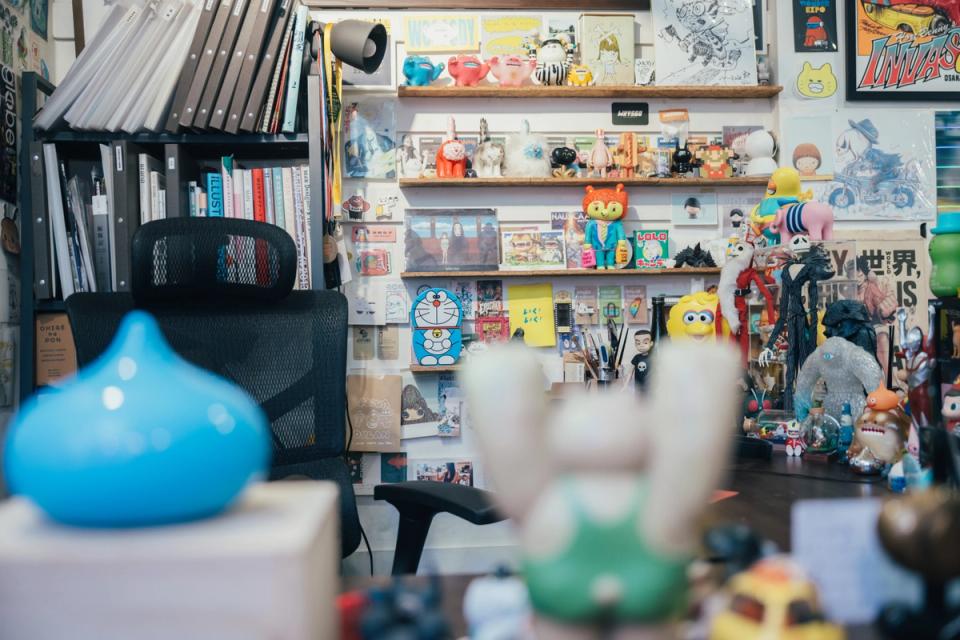
Where did the studio’s dazzling collection of more than a hundred figures come from? Half are Dylan’s own work; the rest are treasures gathered at toy fairs in Taiwan and overseas. His go-to spots for toy-hunting include Nakano Broadway in Japan and the old ground-floor arcade at Taipei’s Binwang building, a new gathering place for Taiwan’s toy enthusiasts. He is especially drawn to secondhand toys from earlier generations and merchandise from classic properties no longer produced. Whenever the price feels right, he buys without hesitation: to him, they are rare treasures capable of carrying him back to childhood. Their presence is a constant reminder: “Never forget why you began. Hold on to the part of yourself that loves to play and create, and enjoy the process.”
Bonus: Three Classic Figures from Dylan’s Collection
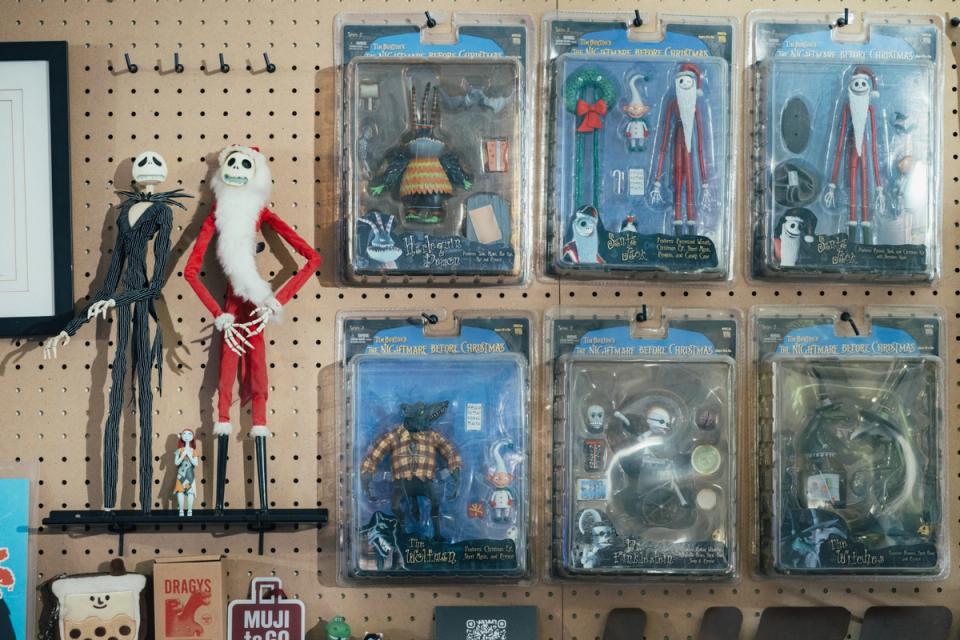
Toy 01: The Nightmare Before Christmas Figures
The 1993 film The Nightmare Before Christmas is Dylan’s favorite stop-motion film, and its figures were among the first toys he collected, many of them bought from Yahoo! Japan’s shopping site. “I’m especially drawn to that honest, handmade and hand-painted quality. You can feel the warmth when you touch them. Now that AI-generated work is everywhere, art with a genuine human touch feels more precious than ever.”
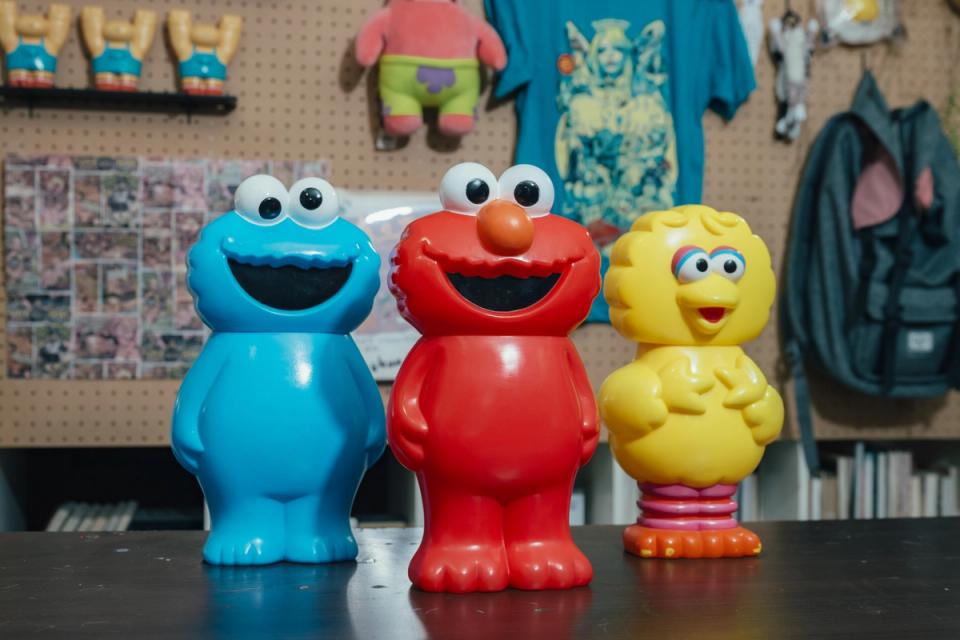
Toy 02: Sesame Street Character Cookie Jars
Since the American children’s program Sesame Street debuted in 1969, it has remained beloved around the world. Dylan’s Cookie Monster and Big Bird cookie jars were not sold as a set; each was a trophy discovered at a different toy shop. Big Bird has since become one of his daughter’s favorite toys waterproof and tough enough to withstand a knock.
Toy 03: His First Original Character, WOOOODY
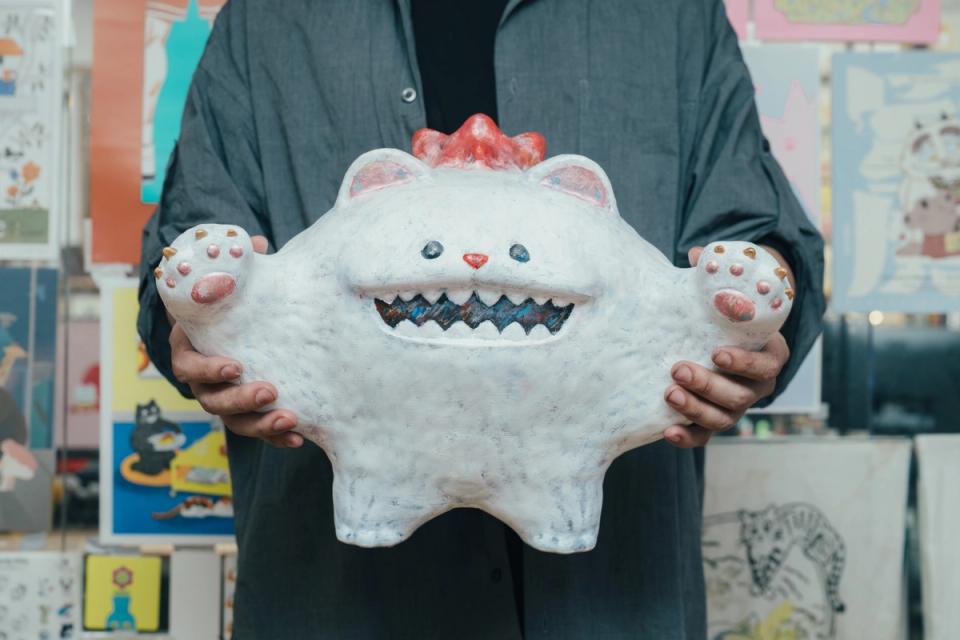
The birth of WOOOODY marked the decisive moment when Dylan became an art-toy designer. He describes the character as “a gentle heart inside a powerful body.” This enormous WOOOODY carries richly tactile textures, while lustrous color brings it vividly to life. Like a guardian of dreams, it accompanies Dylan through every day of creation.